This week, Triple Point Heat Networks Investment Management paid a visit to Bristol for a guided tour of their four heat networks, all of which were previously funded by the Government’s Heat Networks Investment Project (HNIP). These projects are key contributors to Bristol’s bold city-wide heat network initiative, showcasing how heat networks can reliably deliver fairly priced, low-carbon heating to thousands of homes, businesses, and public buildings.
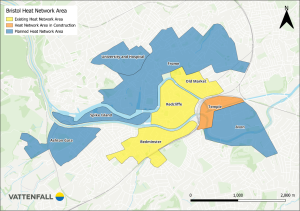
Through the Bristol City Leap partnership, Vattenfall operates Bristol heat networks, which currently serves almost 6,000 homes equivalent[1] across 4 network areas, Redcliffe, Old Market, Bedminster and Temple. All four heat networks were funded by HNIP and support Bristol City Council’s goal of becoming carbon neutral by 2030.
Supporting the city’s plans to optimise its energy infrastructure, Vattenfall is working with Bristol City Leap to expand and develop their existing heat networks and ultimately interconnect them to create a single, city-wide Bristol heat network.
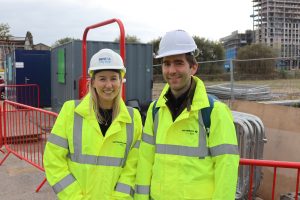
During the visit on 24th September, colleagues from Vattenfall and Bristol City Leap showed Triple Point Heat Networks Investment Management (TPHNIM) around the four heat network areas, showcasing some of the new and existing developments in the city set to benefit from low carbon heating and hot water.
Amy Fry, Relationship Manager at TPHNIM, praised the project, stating, “It’s fantastic to witness the tangible impact of HNIP funding in action.” She highlighted Bristol as “a prime example of how private sector investment is laying the groundwork for accelerated growth in low-carbon infrastructure.” Over the next five years Vattenfall expects to invest £475 million to expand Bristol’s city-wide heat network[2], demonstrating how HNIP has acted as a catalyst for additional investment to support the network’s growth and modernisation.
The HNIP delivery partner team was joined by members of the Vattenfall Bristol management team, Helen Reed, Bristol City Leap’s Client Lead, and Alex Minshull, Sustainable City and Climate Change Service Manager at Bristol City Council.
During the visit, attendees were given an in-depth tour of the various heat sources supplying low-carbon heat to homes and businesses across Bristol. This included England’s largest harbour-based water source heat pump at Castle Park Energy Centre, which was recognised as ‘Heat Pump City of the Year’ by the European Heat Pump Association in 2022.
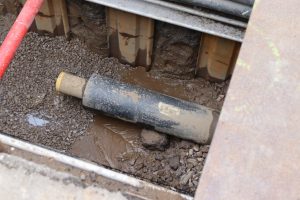
By 2030, Vattenfall’s goal is to support the equivalent of 12,000 buildings in Bristol through a combination of water source and air source heat pumps, electric boilers, thermal storage and waste heat from industrial processes, including data centres and energy from waste facilities.
The tour traced the Old Market and Redcliffe heat network routes, identifying a range of new development and retrofit connections, including a Victorian primary school and fire station which are already receiving low carbon heating and hot water.
The group also visited the Temple heat network area which is currently in construction and will go on to connect buildings as part of the new Temple Quarter Enterprise Campus.
Dom Barton, Director of Heat Networks Bristol, Vattenfall, said:
The Heat Networks Investment Project has been a key enabler in our efforts to deliver low carbon heat in Bristol. Funding received to date has contributed to almost 6,000 homes equivalent receiving heating and hot water from the Bristol heat network. We are delighted to see commitment to city-scale decarbonisation reaffirmed through over £1.7 million to support the development of our brand-new network in Temple. This network will use a combination of technologies to bring low carbon heat to even more local homes and businesses, as well as student housing and university buildings.
Councillor Martin Fodor, Chair of the Environment and Sustainability Policy Committee, Bristol City Council, added:
Bristol City Council has an ambition to grow and extend the Bristol heat network. We’re pleased to see this vision being brought to life by Vattenfall, as new network areas begin to be constructed thanks to the funding received by the Heat Networks Investment Project.
Expanding the heat network helps the city to have low carbon heat where it’s needed at a fair price. The chance to collaborate is exciting – projects such as the regeneration of Temple Island and the new Temple Quarter Enterprise Campus being connected shows low carbon infrastructure for the future can be put in place.
[1] The Bristol heat network supplies residential and commercial buildings. 4,314 residential homes are currently connected,
as of September 2024. Homes equivalent for commercial buildings has been calculated by 3250kWh per home.
[2] Equivalent of 5000 homes served by Vattenfall’s Bristol Heat Network – Vattenfall